

If your job search feels like shouting into the void, there’s a reason—and it might not be what you think.
You spend an hour tailoring your resume. Another 20 minutes writing a thoughtful cover letter. You even reach out to the hiring manager on LinkedIn.
Then… silence.
No confirmation. No rejection. No interview.
If that scenario feels familiar, you’re not alone. There are many valid reasons you might not hear back—competition, timing, fit, or yes, even your application materials. But there’s one cause that doesn’t get talked about enough:
Ghost job postings.
And they’re far more common than most people realize.
This guide will walk you through what ghost jobs really are, why companies use them, and how you can avoid wasting time on listings that were never real to begin with—so you can refocus your energy on the opportunities that truly matter.
What Is a Ghost Job Posting?
A ghost job is a listing that appears real—but isn’t being actively recruited for. In some cases, the role:
- Has already been filled
- Is posted speculatively “just in case” the company decides to hire
- Exists for appearance, not actual headcount
- Was never intended to result in a hire
Some ghost jobs are strategic. Others are manipulative. But either way, they create the same result for job seekers: false hope, wasted time, and burnout.
How common are they? Estimates suggest that between 20-30% of job postings online today are ghost jobs—roles that either aren’t active or never lead to a hire.
Why Do Employers Post Ghost Jobs?
Ghost postings aren’t always malicious. Sometimes they’re just misaligned with reality. Here are the most common (and surprising) reasons they exist.
- 1
Pipeline Building: Companies collect resumes in advance of future hiring needs. But many never circle back—or the role is deprioritized without notice.
- 2
Market Testing: Organizations use postings to gauge candidate availability, salary expectations, or market interest before officially opening the role.
- 3
Brand Theater: Some companies post jobs to appear busy and growing—even if they’re not actively hiring. Others post openings to pacify overworked teams or subtly pressure underperforming employees.
- 4
Compliance and Policy: Roles may be posted to meet internal HR rules or external hiring regulations—especially when the company already knows who they’re hiring.
Why Ghost Job Posts Hurt More Than You Think
These postings don’t just waste time—they affect confidence, motivation, and perception.
How to Spot a Ghost Job: 5 Red Flags
You can’t always be sure, but these signs can help you vet listings before you sink too much time into them.
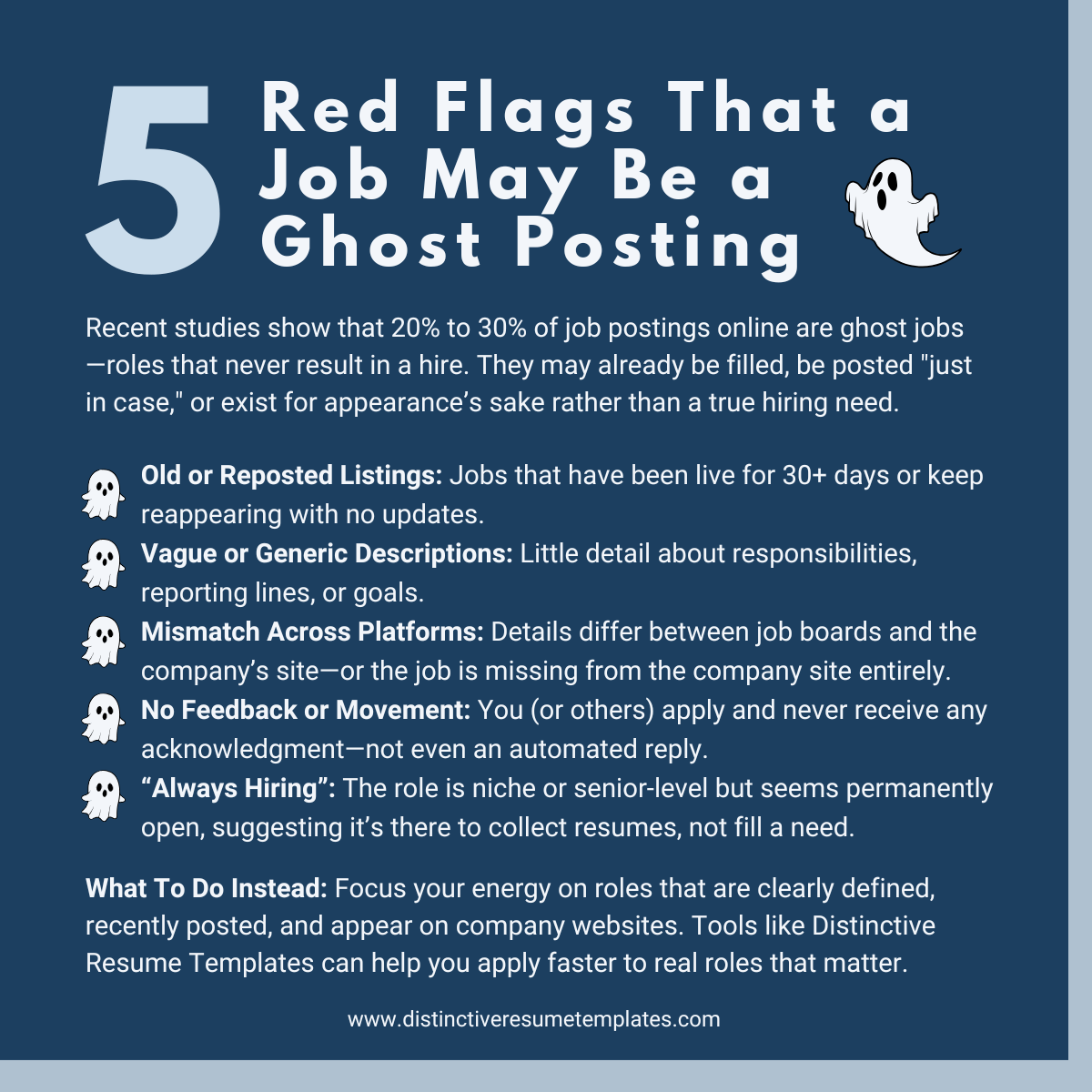
What to Do Instead: 6 Ways to Reclaim Your Time
You can’t control the job market—but you can control where your energy goes.
And when you do identify a legitimate opportunity? Use tools that help you move quickly without sacrificing quality. A professionally designed resume template from Distinctive Resume Templates can save hours of formatting while helping you present your value clearly and confidently—so you can apply with focus, not fatigue.
Final Thought: It’s Not Always You—Sometimes It’s the System
Job searching is never easy. But ghost jobs add a layer of false hope that makes the process feel more broken than it is.
The truth? You may not be getting rejected—you may be applying to roles that were never real in the first place.
Knowing how to spot these listings gives you power. It helps you redirect your time and focus toward genuine opportunities—and reclaim control over a process that can feel anything but fair.
You deserve clarity. You deserve traction. And yes, you deserve to hear back.
Ready to Stop Wasting Time on Dead-End Jobs?
If you’re tired of spending hours on applications that go nowhere, you’re not alone—and you’re not doing anything wrong.
The system may be broken. But your strategy doesn’t have to be.
That’s exactly why we created the Job Application Traction Bundle—an actionable toolkit built to help you:
- Avoid ghost job traps
- Customize your resume faster using Distinctive Resume Templates
- Apply with clarity, confidence, and competitive positioning
- Increase interview invites—without burning out
The Job Application Traction Bundle won’t eliminate ghost jobs—but it does help you avoid spending precious time on the wrong ones. It gives you the tools to focus on real, high-quality opportunities—and dramatically increase your chances of landing interviews when it counts. It’s not about sending more applications. It’s about sending the right ones—faster, smarter, and with tools that work.
Download the Job Application Traction Bundle now and start hearing back.
About the Author: Michelle Dumas