A resume that worked in 2020 might quietly sabotage your job search in 2025.
The job market has changed. A lot. Artificial intelligence is reshaping how resumes are screened, hiring managers are more pressed for time than ever, and the competition? It’s sharp, strategic, and often using tools you may not even know exist.
In this new landscape, your resume isn’t just a document—it’s a test. First by the bots. Then by human readers. Both have different criteria, but if you miss the mark with either, your job application could get filtered out before it ever has a chance.
The good news? Most of the resume mistakes job seekers make are fixable once you know what to look for.
In this guide, you’ll learn 7 resume mistakes to avoid in 2025—including how to beat the bots, stand out to recruiters, and write with clarity (not AI confusion).
Here are 7 resume mistakes to avoid in 2025—and what to do instead if you want to get hired faster.
Mistake #1: Using a Resume Template That Isn’t Truly ATS-Friendly
Most job seekers don’t realize this, but a large percentage of resumes never even make it to a human reader. Why? They get lost inside the black hole of Applicant Tracking Systems (ATS) because the formatting confuses the software.
Here’s the kicker: Many of the free resume templates you find online or use in Microsoft Word or Canva look modern but are built with graphics, text boxes, or multiple columns set up in complex tables that break the ATS parsing process.
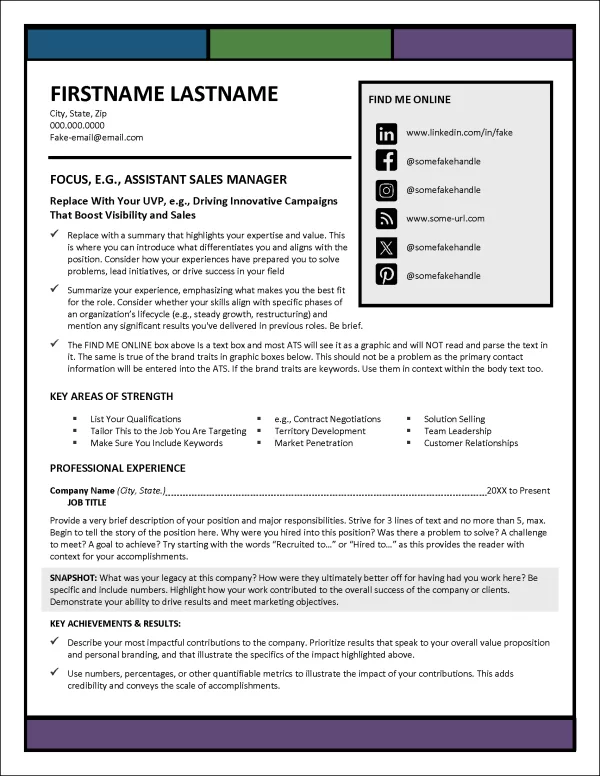
Is it okay to use graphics on a resume? Yes—but only when used thoughtfully and strategically. Most ATS simply skip over graphics, which means any text embedded in those graphics won’t be read. That’s also why text boxes can be problematic—ATS often treats them like images and ignores the content inside. This is a subtle but important distinction. At Distinctive Resume Templates, we use graphics only in ways that preserve full ATS compatibility, prioritizing readability and structure.
What makes a resume ATS-friendly in 2025? Choose a resume template that was built specifically to be both modern-looking and ATS-friendly. At Distinctive Resume Templates, we obsess over that intersection—giving you beautifully designed resumes that parse correctly and showcase your value.
For a deeper dive into what makes a resume truly ATS-compatible, check out our myth-busting post: 5 Myths About ATS-Friendly Resumes Job Seekers Need to Know
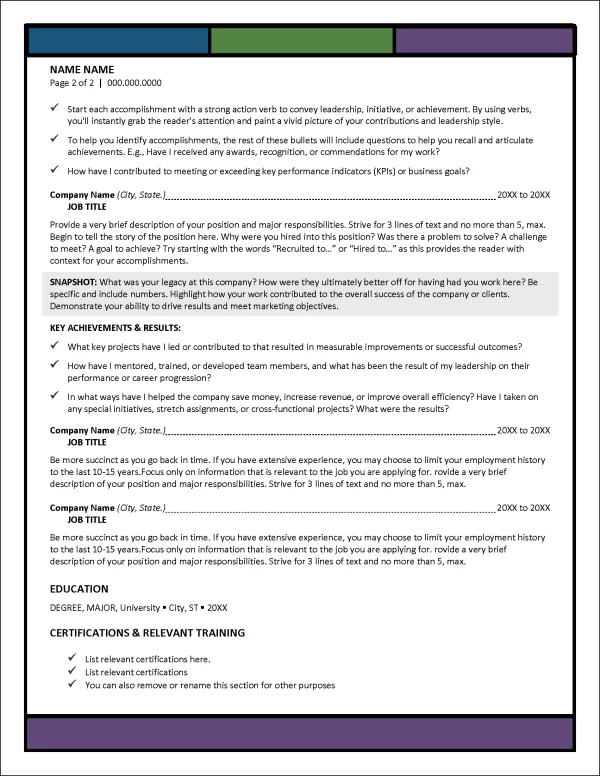
Example: Here’s one of our ATS-optimized resume designs from our Step Up Collection that proves you don’t have to sacrifice style for substance.
QUICK TAKEAWAY:
Avoid resume designs and templates that confuse ATS software—clean formatting wins.
Mistake #2: Overcomplicating the Resume Design for Human Readers
Let’s say your resume clears the ATS. Great. But the next challenge is just as critical: capturing a recruiter’s attention in just a few seconds.
Dense blocks of text, tiny fonts, inconsistent formatting, or visual clutter can make your resume exhausting to read. And that’s a problem when recruiters are scanning hundreds of resumes.
How do you make a resume easy to read for recruiters? Your resume should be visually scannable with clear section headers, clean alignment, consistent fonts, and well-structured white space. The goal? Make it easy for someone to come away with your value and career focus at a glance.
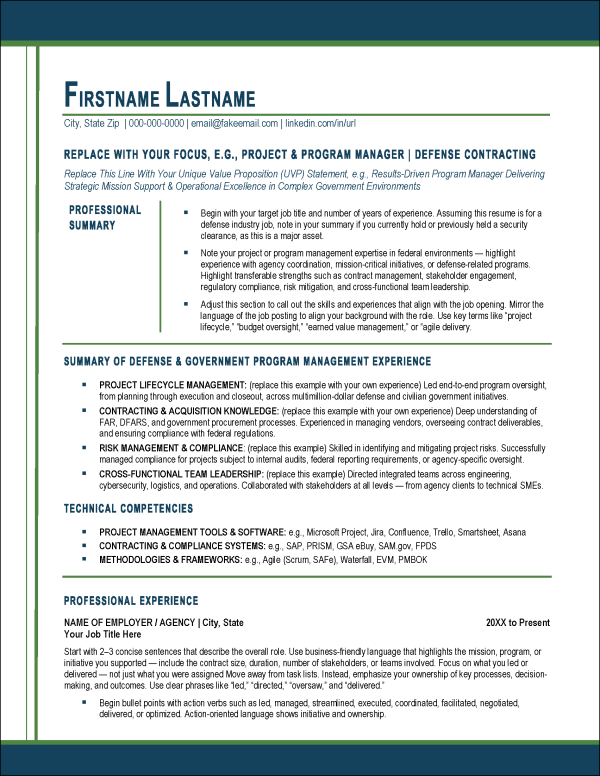
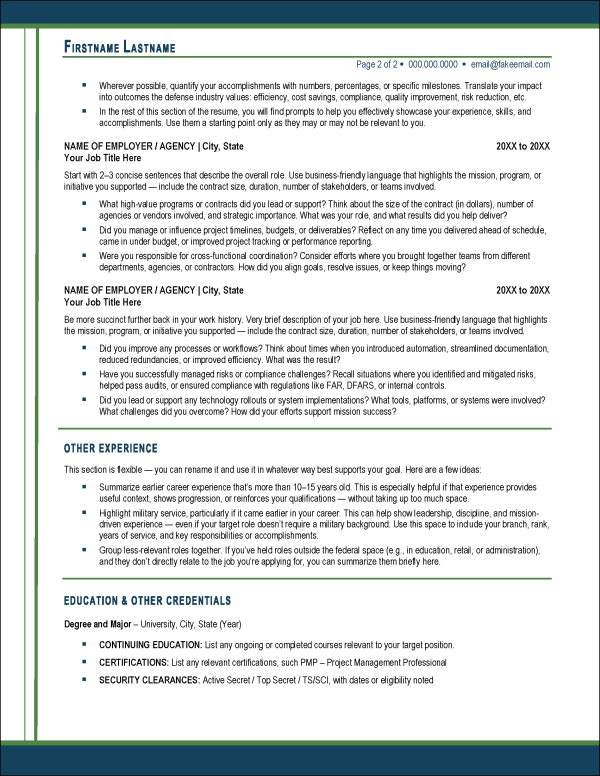
Example: This resume template created for military transitions demonstrates how design clarity and scannability can make your strengths pop at a glance.
QUICK TAKEAWAY:
Make it easy for humans to skim your resume—strong formatting helps your value shine.
Mistake #3: Sending a Generic, Unfocused Resume
One of the first questions a hiring manager asks when they open your resume is: “What role is this person targeting?”
If the answer isn’t immediately clear, you’ve lost momentum.
Worse, if your resume reads like a laundry list of experience without a clear connection to the role you’re applying for, it feels generic and unmemorable.
How do you tailor a resume to a specific job?
Tailor your resume for each application. This doesn’t (usually) mean rewriting the whole thing—it means adjusting your headline, summary, and top skills to reflect the role you want. Speak to the employer’s needs. Show how you solve the problems they’re hiring to fix.
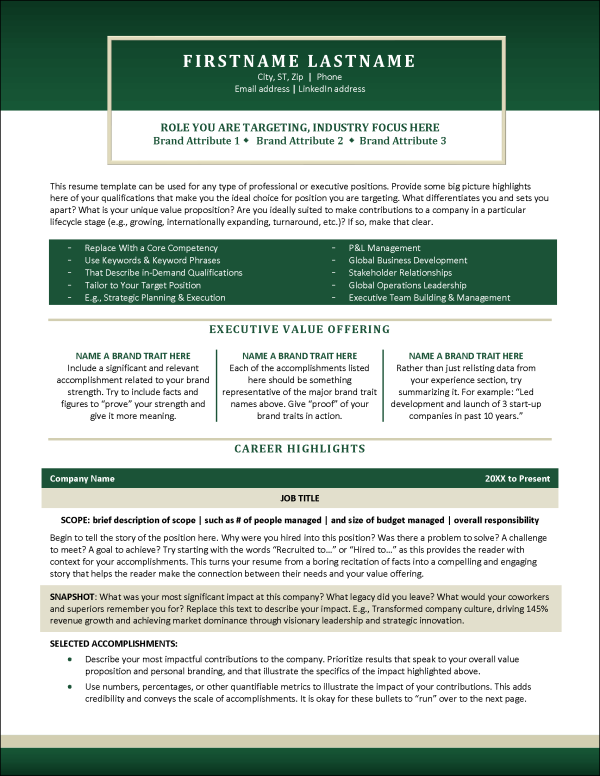
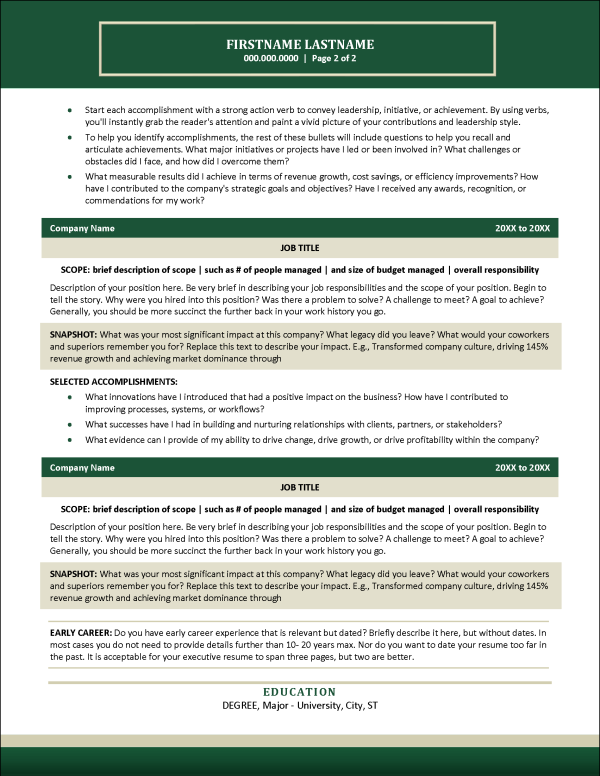
Example: See how the placeholder for you to insert your focus headline in this resume template from our Leading Edge Collection helps you clearly position yourself for a specific role from the very first glance. All of our resume templates are created with a similar headline placeholder.
QUICK TAKEAWAY:
A focused resume is more memorable—and more likely to get interviews.
Mistake #4: Relying Too Heavily on AI (and Losing the Human Element)
AI can help you brainstorm, research keywords, or analyze job descriptions—but if you use it to write your entire resume, it shows.
Recent surveys found that 74% of hiring managers can spot AI-generated content, and 57% say it makes them less likely to move forward with a candidate.
Should you use AI to write your resume?
Use AI as a tool, not a ghostwriter. Then revise with your own voice. Include storytelling, real-world examples, and language that sounds like you. A little imperfection is better than sounding like a machine.
QUICK TAKEAWAY:
AI can support your writing—but authenticity and your human voice win interviews.
Mistake #5: Listing Achievements Without Context
“Increased sales by 23%.”
Great. But compared to what?
Too many resumes list numbers and results without any context. And without context, hiring managers can’t gauge the true scope or relevance of your achievements.
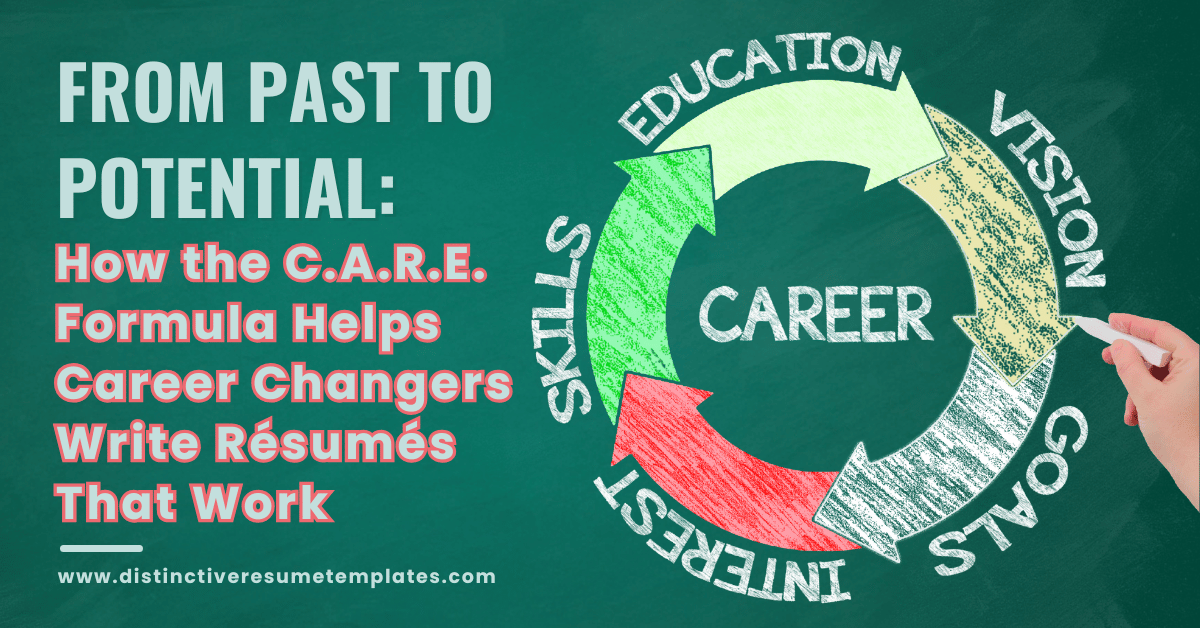
How do you write resume accomplishments that show impact? Use the C.A.R. resume writing method: Challenge, Action, Result. Instead of just giving the outcome, explain the situation and what you did to achieve it. This frames your success and makes it easier for employers to understand your impact.
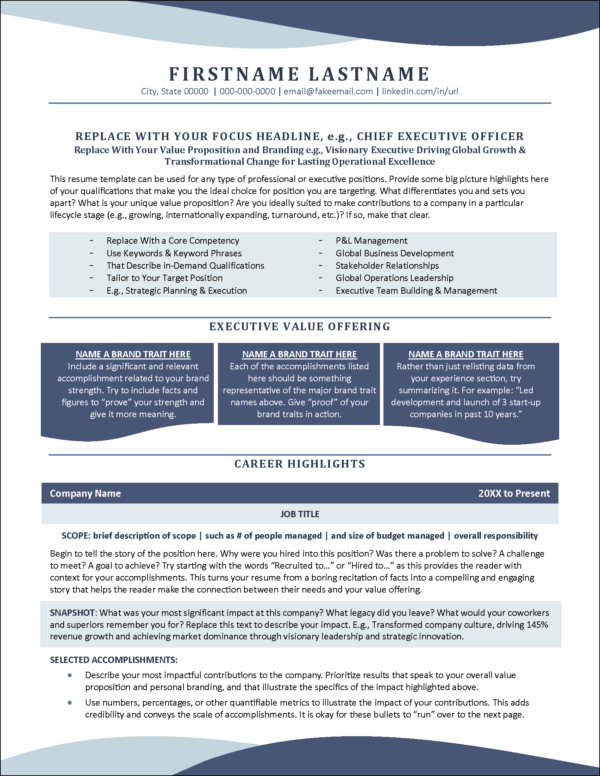
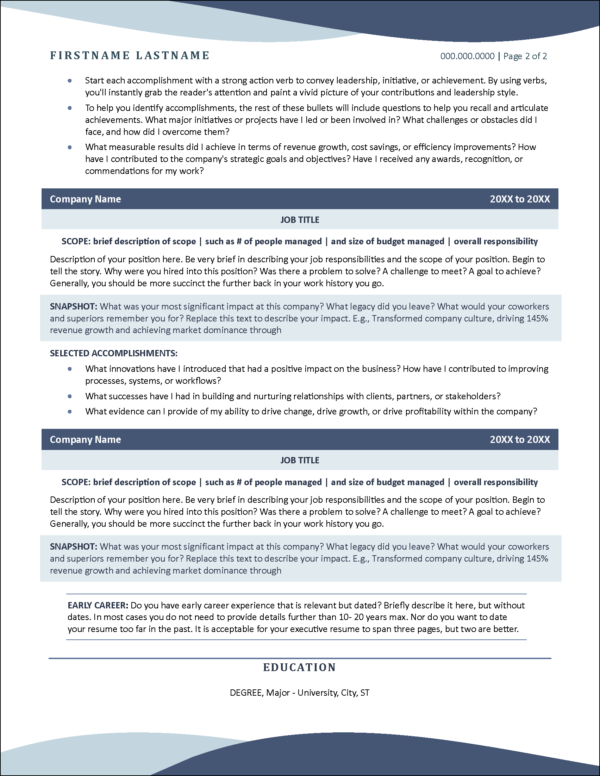
Example: Just like all Distinctive Resume Templates, this resume template from our Executive Style Collection is designed to help you frame your results within context-rich bullet points that show real impact.
QUICK TAKEAWAY:
Context turns data into impact. Don’t just share numbers—share the story behind them.
Mistake #6: Treating Your Resume Like an Autobiography
Your resume is not your life story. It’s a marketing document.
That means you have choices. Choices about what to emphasize and what to de-emphasize. Choices about how to handle tricky areas like career gaps, job-hopping, or age bias.
How should you handle gaps or bias on your resume?
Think strategically. Address gaps proactively—briefly, professionally, and with a positive spin. Highlight only the most relevant experience. The goal isn’t to be exhaustive. It’s to be effective.
QUICK TAKEAWAY:
You control the narrative—highlight strengths and reframe challenges.
Mistake #7: Skipping Strategic Keyword Optimization
This one is huge. In the age of AI-powered recruiting, resumes are often filtered out not because they’re poorly written—but because they’re missing key phrases.
Hiring systems are trained to look for specific language. If your resume doesn’t include the right keywords, it may never be seen by a human.
Why keyword optimization matters in modern resumes: Review the job posting carefully. Identify the core skills, qualifications, tools, and technologies they mention. Then mirror that language in your resume—authentically, not robotically. This boosts your chances of getting through automated filters and signaling alignment to human reviewers.
QUICK TAKEAWAY:
Keywords are your resume’s currency—spend them wisely to boost visibility.
Final Thoughts
A resume that works in 2025 has to pass two tests: technology and human attention.
Avoid these seven mistakes, and you’ll give yourself a significant edge in both. You don’t need to be a resume expert—you just need the right tools, templates, and guidance.
If you’re ready to build a resume that reflects the real you—and gets noticed for all the right reasons—check out our full portfolio of ATS-friendly resume templates crafted by an expert who understands what actually works in 2025’s job market.
FAQ: Quick Answers for 2025 Resume Success
Do recruiters care if a resume is AI-generated?
Yes—57% of hiring managers say obvious AI content is a red flag. Use AI to support, not replace, your writing.
What resume format is best for ATS?
The 'safest' format is a clean, single-column layout using standard fonts, clear headings, and no graphics or text boxes. However, your resume can be both ATS compatible and attractively designed. Choose a resume template that was built specifically to be both modern-looking and ATS-friendly such as those from Distinctive Resume Templates.
How long should a resume be in 2025?
Usually 1–2 pages. Focus on relevance over length. Most recruiters prefer concise, tailored content over lengthy career histories.
What’s the most important part of a resume today?
The top third: your headline, summary, and core skills. That’s where attention lands first—make it count.
About the Author: Michelle Dumas