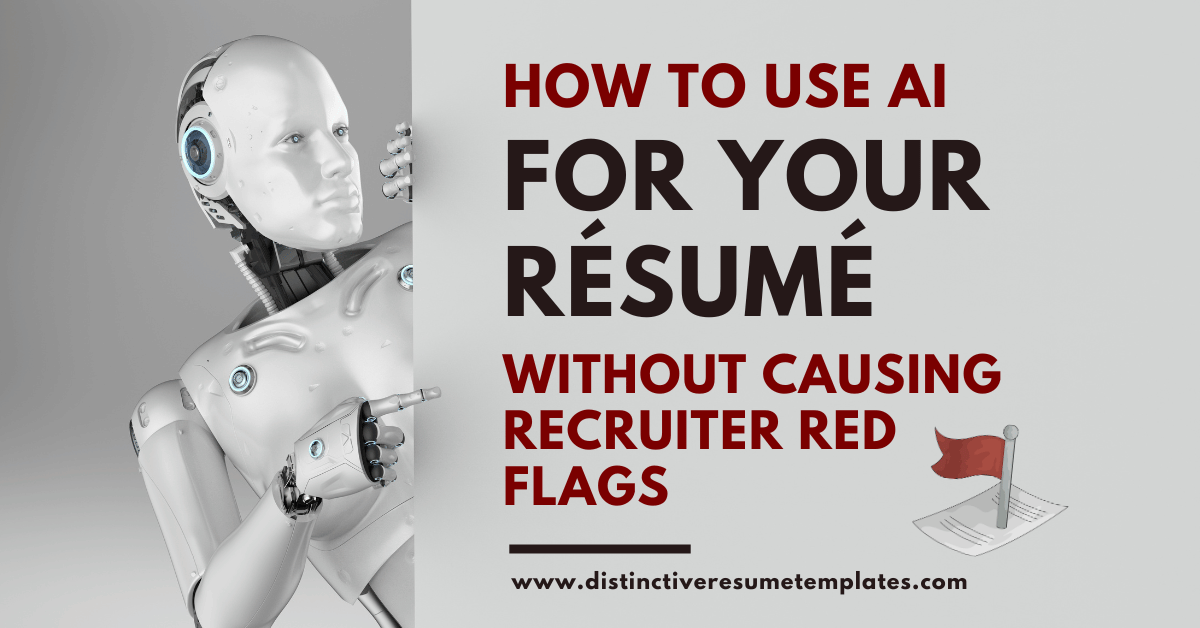
You feed your work experience into ChatGPT. In seconds, it spits out a polished resume. Efficient, yes. But as you hover over “submit,” doubt creeps in: Could this get me flagged—or worse, blacklisted?
You’re not paranoid. This is happening.
AI is now central to job searching and hiring. Nearly 45% of job seekers use AI to enhance their resumes in some way, with Gen Z leading the charge. On the flip side, over 80% of companies deploy AI systems to scan and sometimes reject resumes—with no human review.
Here’s what most people miss: The problem isn’t using AI. It’s using it poorly.
Smart AI use can genuinely elevate your job search. But generic, obvious AI-generated content? That’s where job seekers get into trouble. The good news is that once you understand how this works, you can leverage AI strategically while avoiding the pitfalls that trip up most people.
Let’s break down exactly how to use AI to strengthen your resume—without raising red flags.
Ethics – When Is Using AI for Resume Writing a Smart Strategy, and When Is It Misleading?
AI can absolutely be part of your resume-writing toolkit—but like any tool, it’s how you use it that matters.
Smart AI Use: Your Digital Resume Writing Assistant
Think of AI as your brainstorming partner, not your ghostwriter:
In these ways, AI enhances your authentic story—it doesn’t replace it.
Where AI Resume Writing Crosses Into Risky Territory
Problems arise when AI becomes your stand-in rather than your assistant:
This isn’t just lazy—it’s strategically dangerous. You’ll struggle to defend generic AI content in interviews, and some companies now use detection tools to flag obviously artificial resumes.
Why Authenticity Still Wins
Here’s what recruiters actually want: resumes that feel real and substantive.
That means specific examples that reflect your actual impact, a consistent voice that matches how you communicate, and content you can confidently expand on when asked.
AI can help you articulate this more effectively—but the substance has to be genuinely yours. In other words, ethical AI use helps you get there faster—but you still have to drive.
The Reality Check: What Recruiters Really Think
Most recruiters aren’t anti-AI. In fact, many use AI themselves to sort resumes and manage the hiring process.
What they do reject is content that’s obviously generic, templated, or misaligned with the role. A 2024 recruiter survey found that only 19.6% would automatically reject a resume for being AI-generated—but they would quickly move on from resumes that feel impersonal or disconnected from the job requirements.
The bottom line? It’s not that AI use is unethical. It’s that sloppy execution is ineffective—and easily spotted.
The Risks of AI-Generated Resumes – From Rejection to (Informal) Blacklisting
Using AI poorly doesn’t just make your resume less effective—it can actively hurt your chances. Here’s how.
Resume Screening Happens Before a Human Even Looks
- 83% of employers now use AI or automated systems to screen resumes.
- Up to 65% of them automatically filter out resumes before any human review—often for generic or poorly matched content.
Your resume could be dismissed in seconds for lacking role-specific keywords, overusing generic phrasing, or having unnatural sentence structure that screams “AI-generated.”
Here’s what recruiters consistently report: AI-written resumes often fail the nuance test. They sound polished but generic—missing the specific impact stories and authentic voice that make candidates memorable.
What “Blacklisting” Really Means
Let’s be clear: Most companies don’t maintain some ominous digital “blacklist.”
But here’s what can happen:
You may never know you’ve been filtered out—which makes recovery nearly impossible.
Interview Red Flags Recruiters Watch For
Even if you get past the initial screening, AI misuse can come back to bite you later:
These disconnects destroy credibility fast. In competitive hiring markets, recruiters call them “dealbreakers.”
Consider this scenario: A marketing professional uses AI to generate impressive-sounding metrics for their resume—“increased engagement by 340%” based on loosely related data. The resume gets them interviews, but when pressed for details about methodology or campaign specifics, they can’t provide coherent answers.
Result? Trust evaporates instantly. The hiring manager moves on to candidates who can authentically discuss their work.
The Bottom Line: AI can absolutely help—but used carelessly, it introduces brand-damaging risk. Your resume is a preview of how you think and communicate. If it feels artificial, you’re signaling that you can’t be trusted with higher-stakes communication on the job.
The good news? These risks are avoidable when you use AI strategically rather than carelessly.
How Recruiters Detect AI – And What They’re Looking For
AI-generated resumes aren’t always easy to spot—but experienced recruiters are getting faster at identifying them. Here’s what they watch for:
Behind-the-Scenes Screening Tools
The Human “Eyeball Test”
Recruiters have developed instincts for spotting artificial content:
As many recruiters have noted: They’re not anti-AI. But when the resumes of every applicant sound like they were written by the same chatbot, none of them stand out.
What Makes Resumes Stand Out—in a Good Way
The resumes that get attention share these characteristics:
So, Is Detection Getting Better?
Yes—but not in the way most job seekers fear. The best recruiters still rely on human judgment. What they’re really looking for is this:
- Does this resume feel like it was written by a person who did this work?
- Can the candidate speak fluently and confidently about what’s on the page?
- Does the communication style match the professional value being presented?
If the answer to those questions is “yes,” you’re in the clear—even if AI helped shape your resume draft.
How to Use AI for Your Resume Strategically—Without Losing Your Voice
AI can help you write faster and more effectively. But the key is to treat it like a collaborative tool—not a substitute for your own insight. This is where using a strong framework, like Distinctive Resume Templates, can make all the difference. The expertly created resume templates provide professional structure and visual polish while guiding smarter AI prompts, helping you merge efficiency with authenticity.
The Truth About AI-Generated Resumes
AI often churns out content that looks slick at first glance but quickly falls apart:
- Overused buzzwords and clichés
- Weak storytelling that misses your unique brand voice
- Generic phrasing that makes thousands of resumes sound exactly the same
So, yes—blind reliance on AI can hurt more than it helps. Recruiters notice the patterns, and generic AI-driven resumes blend into the pile instead of standing out.
Why Distinctive Resume Templates Solve That Problem
Distinctive Resume Templates flip this on its head. They’re not just shells for resume design—they’re frameworks built by a resume expert to guide better thinking and better AI prompting. For example:
That means you’re not fighting with AI’s limitations. You’re steering it.
A Quick Note on Professional Resume Writers
Of course, there’s no substitute for working with a skilled professional resume writer if you have the opportunity. A pro can bring deep expertise, perspective, and polish that even the best tools can’t fully replace. But if hiring a professional isn’t possible—or if you want to keep updating and tailoring a professionally written resume yourself—Distinctive Resume Templates give you the framework and guidance to do it confidently.
Step 1: Use AI as a Resume Writing Assistant, Not a Ghostwriter
Instead of asking AI to churn out entire sections of your resume, use it like a helpful editor or brainstorming partner. For example:
When you use AI this way inside a Distinctive Resume Template, the framework ensures the output stays structured, ATS-friendly, and professional. Think of AI as a supportive writing coach and the template as the blueprint—you still own the story and the results.
Step 2: Reclaim Your Voice
Whenever AI generates text, you should edit:
Before-and-After Example:
> AI version: “Led cross-functional team to improve efficiency by 20%.”
> Humanized: “Worked with IT and operations to streamline reporting—cut weekly prep time by 20%, freeing up hours for analysis.”
The resume templates make this step easier by prompting you to quantify results and show context, so you always sound like yourself.
Step 3: Run Final Filters
The Best of Both Worlds
Job seekers often feel torn: they want the speed of AI but fear sounding robotic or being rejected by ATS. Distinctive Resume Templates bridge that gap. They turn AI from a blind writer into a smart assistant, giving you:
Think of these templates as AI blueprints. Every section is designed with cues and prompts that transform AI’s raw output into recruiter-ready content. Instead of wasting hours fixing generic chatbot resumes, you’ll have a repeatable system that delivers a resume that’s fast to produce, uniquely yours, and powerful enough to stand out.
When you strategically combine AI tools with expertly designed resume templates, you don’t just avoid red flags—you stand out for the right reasons.
So… Will You Get Blacklisted for Using AI On Your Resume?
Here’s the straight answer: Using AI will not get you blacklisted on its own. Recruiters know these tools exist, and many use them too. What will get you sidelined is how you use them.
You put yourself at risk if:
- You exaggerate or fabricate experience
- You submit a resume so generic it could belong to anyone
- You stumble in interviews because you can’t explain what’s on the page
- But when AI is used thoughtfully—as an assistant, not a replacement—it becomes an advantage. Recruiters consistently say they don’t mind AI-assisted resumes that are clear, authentic, and personalized. They mind resumes that feel fake, careless, or indistinguishable from hundreds of others.So, no—you won’t be blacklisted for using AI. You’ll be blacklisted for misusing it.
Conclusion – Embrace AI, But Own Your Story
AI is here to stay, and when you use it wisely, it can accelerate your job search instead of sabotaging it. The secret is balance: let AI handle the heavy lifting, but make sure you provide the strategy, authenticity, and voice.
That’s exactly why Distinctive Resume Templates exist. They give you:
- The ATS-friendly design recruiters expect
- The built-in prompts that guide AI toward authentic, results-focused content
- A repeatable system you can rely on for every career move
When you pair AI with these templates, you don’t just get a resume—you get a powerful career tool that helps you stand out, sound authentic, and show up with confidence.
Your story is your advantage. AI can support it. Distinctive Resume Templates help you tell it brilliantly.
FAQs About AI and Resumes
Will using AI to write my resume get me blacklisted?
No. Using AI itself won’t get you blacklisted. What can hurt you is submitting a generic, fake, or inaccurate resume. Recruiters only flag resumes that feel careless, misleading, or inconsistent.
Do recruiters know if I used AI to write my resume?
Sometimes. Applicant tracking systems (ATS) and AI detection tools can flag text that sounds robotic or repetitive. More often, recruiters notice when a resume feels generic or doesn’t match how you speak in interviews.
What is the biggest risk of an AI-generated resume?
The biggest risk is losing authenticity. If your resume sounds like everyone else’s—or you can’t explain what’s written—recruiters will quickly move on.
How can I safely use AI for my resume?
Use AI as a helper, not a ghostwriter. Ask it to improve bullet points, check grammar, suggest keywords, or polish language. Then edit carefully so the final draft reflects your real experience and voice.
Can AI-written resumes pass ATS screening?
Not always. Particularly if you have used an AI-powered resume building tool there is a risk that it will add formatting that jumbles ATS parsing. Using an ATS-friendly framework, like Distinctive Resume Templates, ensures your resume is both human-friendly and machine-readable.
Is it okay to be honest about using AI in my job search?
Yes. Many employers understand candidates use AI tools. The key is being able to confidently explain every detail on your resume and showing that you own your story.
What’s the best way to combine AI and resume templates?
Start with an ATS-friendly professional template such as Distinctive Resume Templates that provides structure and prompts. Then use AI to fill in details, brainstorm wording, or refine phrasing. This combination gives you speed, clarity, and authenticity.
Can AI make me sound better than I really am?
AI can polish your words, but it should never invent skills or results. Exaggerating will backfire in interviews (or prevent you from getting the interview in the first place). Always stick to truthful achievements and real experiences.
What’s the advantage of Distinctive Resume Templates with AI?
They provide the structure and built-in prompts that guide AI to generate personalized, results-focused content. This ensures your resume looks professional, passes ATS filters, and still feels uniquely yours.
Is it still worth hiring a professional resume writer?
Yes. A skilled resume writer brings expertise, strategy, and outside perspective that no AI tool can fully replace. If you can’t hire a pro, or want to keep updating a professionally written resume yourself, using a template + AI is the next best way to create a strong, authentic resume.
About the Author: Michelle Dumas